
You work freelance as a physiotherapist and are building a website for your practice? Then since 1 September 2024 you have been governed by the MTD-Gesetz 2024 (Act on Higher Medical-Technical Services). The old MTD-Gesetz of 1992 no longer applies. The short answer: advertising is allowed, but not every kind. § 39 Abs. 1 MTDG prohibits advertising that damages the standing of the profession, and expressly any comparative, discriminatory or unobjective promotion. The law leaves open what exactly “unobjective” means. On this page you will find out which statements are safe and which are risky, how to use the protected professional title correctly, why your entry in the Gesundheitsberuferegister (health professions register) matters, how to present prices and reimbursement, and what your Impressum (legal notice) needs under § 5 ECG. Every statement refers to the section in the RIS (Federal Legal Information System). The MTD-Gesetz 2024 does not provide for a professional chamber of its own like the Ärztekammer (medical chamber). In borderline cases, contact the professional association Physio Austria or a legal adviser.
Websites for physiotherapists: what the MTD-Gesetz allows
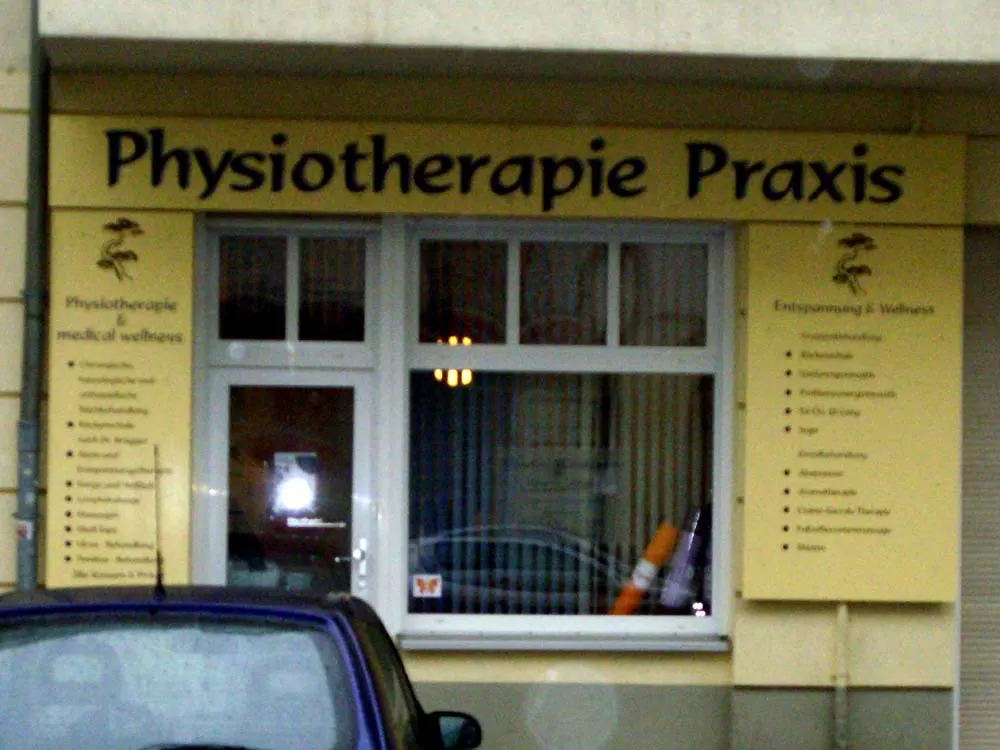
Since 1 September 2024, physiotherapists have been governed by the MTD-Gesetz 2024 (MTDG, Act on Higher Medical-Technical Services). The old MTD-Gesetz of 1992 ceased to apply at the end of 31 August 2024 (§ 60 Abs. 3 MTDG). For your website, the key rules are § 39 Abs. 1 MTDG (no advertising that is damaging, comparative, discriminatory or unobjective) and § 3 MTDG (protected professional title). The law does not define exactly what “unobjective“ means. The MTD-Gesetz 2024 does not provide for a professional chamber of its own like the Ärztekammer (medical chamber); for questions, contact the professional association Physio Austria.
Allowed and not allowed
What may go on the website
- Running a website and giving objective information about your services; the MTDG only prohibits certain kinds of advertising, not advertising as such (§ 39 Abs. 1 MTDG).
- Using the professional title “Physiotherapeutin“ or “Physiotherapeut“ (physiotherapist) if you are entitled to practise; when practising, you are in fact required to use it (§ 3 Abs. 1 MTDG).
- Using an additional designation that refers to completed special training under the old MTD-Gesetz or a specialisation under § 43 MTDG (§ 3 Abs. 4 MTDG).
- Informing people about costs, the course of treatment and insurance cover; you have to do this for your patients anyway (§ 39 Abs. 3 MTDG).
- Advertising health promotion and prevention services without a doctor’s referral, because you may work without a referral in those areas (§ 20 Abs. 2 MTDG).
- Listing up to two practice locations (Berufssitze) if you work freelance at two sites (§ 30 Abs. 2 MTDG).
What is not allowed
- Advertising that damages the standing of the profession (§ 39 Abs. 1 MTDG).
- Comparative advertising, such as “better than the practice round the corner“ (§ 39 Abs. 1 MTDG).
- Discriminatory or unobjective promotion or advertising (§ 39 Abs. 1 MTDG).
- Promising, giving or accepting payments for referring patients, such as commissions to doctors or gyms (§ 39 Abs. 2 MTDG).
- Using the professional title without entitlement, using a title that could be confused with it, or using a professional title not permitted by law (§ 3 Abs. 5 MTDG).
- Advertising treatment of illness as if a doctor’s referral were never needed; outside health promotion and prevention, you work on a medical or dental referral (§ 20 Abs. 1 MTDG).
- Working freelance without a practice location (Berufssitz), including “online only“ or purely mobile (§ 30 Abs. 3 MTDG).
Which law applies: MTD-Gesetz 2024
The MTD-Gesetz 2024 (BGBl. I Nr. 100/2024) came into force on 1 September 2024 (§ 60 Abs. 1 MTDG). The MTD-Gesetz of 1992 ceased to apply at the end of 31 August 2024 (§ 60 Abs. 3). If your website, your Impressum (legal notice) or your documents still refer to the “MTD-Gesetz 1992“, replace the reference.
Existing entitlements to practise under the old law remain valid (§ 59 Abs. 1 MTDG). So you do not need to apply for anything again, just update the references.
Advertising: what § 39 MTDG prohibits
§ 39 Abs. 1 MTDG reads: in connection with freelance practice, any promotion or advertising that damages the standing of the profession, in particular any comparative, discriminatory or unobjective promotion or advertising, is prohibited.
The law does not define what “unobjective“ or “damaging to the standing of the profession“ means. You are on safe ground with verifiable facts: which treatments you offer, which additional training you have, where and when you can be reached, what a session costs. Promises of a cure, superlatives and comparisons with colleagues are risky. If in doubt, ask Physio Austria.
Breaches of § 39 are administrative offences. § 57 Abs. 1 Z 4 MTDG provides for a fine.
Professional title and the Gesundheitsberuferegister
The titles “Physiotherapeutin“ and “Physiotherapeut“ are protected (§ 1 Abs. 1 Z 6 and § 3 Abs. 5 MTDG). Using them without entitlement is an administrative offence (§ 57 Abs. 1 Z 3 MTDG).
Among other things, you are only entitled to practise if you are entered in the Gesundheitsberuferegister (health professions register) (§ 27 Abs. 1 Z 5 MTDG). According to the Unternehmensserviceportal (USP, business service portal), you must register before you start working. Freelancers are registered by Gesundheit Österreich GmbH (GÖG), employed professionals by the Arbeiterkammer (Chamber of Labour). After registering, you receive a professional ID card that is valid for five years.
The register is public. According to the Arbeiterkammer, patients can view training, main areas of work and additional qualifications online. A link to your entry on your website builds trust and is easy to check.
Showing prices and costs openly
§ 39 Abs. 3 MTDG requires you to inform patients about the planned course of treatment, the costs and your professional insurance cover. This includes which costs social insurance is likely to cover and which the patients pay themselves. The costs charged must be calculated using objective, non-discriminatory criteria.
This duty applies to the patients you treat. A price list on your website does not replace it, but it makes it easier. State whether the prices are gross or net; § 5 Abs. 2 ECG (E-Commerce Act) requires this as soon as you show prices online.
Impressum under § 5 ECG for physiotherapy practices
As a physiotherapist, you are subject to professional rules. § 5 Abs. 1 Z 6 ECG (E-Commerce Act) therefore requires additional details in the Impressum (legal notice). The MTD-Gesetz 2024 does not provide for a professional chamber of its own like the Ärztekammer. The law does not clearly settle whether you must list a voluntary membership, for example in Physio Austria, as a “professional association“.
- Name and geographical address of your practice location (§ 5 Abs. 1 Z 1 and 2 ECG)
- Phone number and email address (Z 3)
- Your professional title “Physiotherapeutin“ or “Physiotherapeut“ and the country in which it was awarded (Z 6)
- A professional association you belong to, if applicable (Z 6)
- A reference to the MTD-Gesetz 2024 with a link to ris.bka.gv.at (Z 6)
- The UID number (VAT ID), if any (Z 7)
Legal basis
Common mistakes
- A reference to the “MTD-Gesetz 1992“ in the Impressum, although the MTD-Gesetz 2024 has applied since 1 September 2024.
- Titles such as “physiotherapy coach“ or “physio trainer“ for team members who are not entitled to practise.
- Comparisons with other practices, such as “pain-free faster than anywhere else“.
- Promises of a cure such as “back pain gone in three sessions“.
- Treatment of illness advertised without mentioning the doctor’s referral.
- Prices without saying whether they are gross or net, and without a note on possible reimbursement by the health insurer.
- A discount for patients sent by a particular doctor or studio, although § 39 Abs. 2 MTDG prohibits referral payments.
- No practice location in the Impressum, only a note about home visits.
How Weblux does it
We build physiotherapy websites with objective service descriptions, your professional title, the link to the Gesundheitsberuferegister and a clear prices page. We do not write comparisons or promises of a cure. The Impressum refers to the MTD-Gesetz 2024 instead of the old 1992 law.
Frequently asked questions
Does the MTD-Gesetz 1992 still apply to physiotherapy?
No. The MTD-Gesetz 2024 (BGBl. I Nr. 100/2024) came into force on 1 September 2024. The MTD-Gesetz of 1992 ceased to apply at the end of 31 August 2024; only a single transitional rule still applies until 2027 (§ 60 MTDG). Existing entitlements to practise remain valid (§ 59 Abs. 1). Update the references in your Impressum (legal notice) and your documents.
Which advertising is prohibited for physiotherapists?
In connection with freelance practice, § 39 Abs. 1 MTDG prohibits any promotion or advertising that damages the standing of the profession, in particular comparative, discriminatory or unobjective advertising. The law does not define what is unobjective in a given case. Objective information on services, training, location and prices is unproblematic. You should leave out promises of a cure and comparisons with colleagues.
Can I treat without a doctor’s referral and advertise that?
Only in one area. Under § 20 Abs. 1 MTDG, you generally work on a medical or dental referral. In health promotion and in primary and secondary prevention, § 20 Abs. 2 allows you to work without a referral. So feel free to advertise prevention services, but do not present treatment of illness as if a doctor’s referral were never needed.
Do I have to be in the Gesundheitsberuferegister?
Yes. Under § 27 Abs. 1 Z 5 MTDG, registration is a requirement for being entitled to practise. According to the Unternehmensserviceportal (business service portal), you must register before you start working; freelancers are registered by Gesundheit Österreich GmbH, employees by the Arbeiterkammer (Chamber of Labour). The register is open to the public. A link to your entry shows patients that you are entitled to practise.
What belongs in the Impressum of a physiotherapy practice?
Under § 5 Abs. 1 ECG (E-Commerce Act): name, address of your practice location, phone and email, the UID number (VAT ID) if you have one, your professional title together with the country in which it was awarded, and a reference to the MTD-Gesetz 2024 with a link. If you are a member of a professional association, state it. The MTD-Gesetz 2024 does not provide for a professional chamber.
This page is not legal advice. What counts are the laws in force and the information from your chamber or your legal adviser.
Request a free draft for your business
No obligation, no appointment needed. Send me a few details and I'll build your first draft.
Get a free, no-obligation quoteSources
- § 39 MTD-Gesetz 2024 (RIS, geltende Fassung) (retrieved on 14 October 2026)
- § 3 MTD-Gesetz 2024 (RIS, geltende Fassung) (retrieved on 14 October 2026)
- MTD-Gesetz 2024, BGBl. I Nr. 100/2024 (RIS, authentisch) (retrieved on 14 October 2026)
- § 5 ECG – Allgemeine Informationspflichten (RIS) (retrieved on 14 October 2026)
- Gesundheitsberuferegister (Unternehmensserviceportal) (retrieved on 14 October 2026)
- Das Gesundheitsberuferegister (Arbeiterkammer Wien) (retrieved on 14 October 2026)
- MTD-Gesetz 2024: Neuerungen, Physio Austria, 04.09.2024 (PDF) (retrieved on 14 October 2026)
Last checked on 14 October 2026.